Why Translating Your Ads Isn't Enough: The Case for True Hyper-Localization
An exploration of how cadence, honorifics, and tone change across Indian languages, proving why a generic TTS tool fails at advertising.
Audic AI Team
Editorial

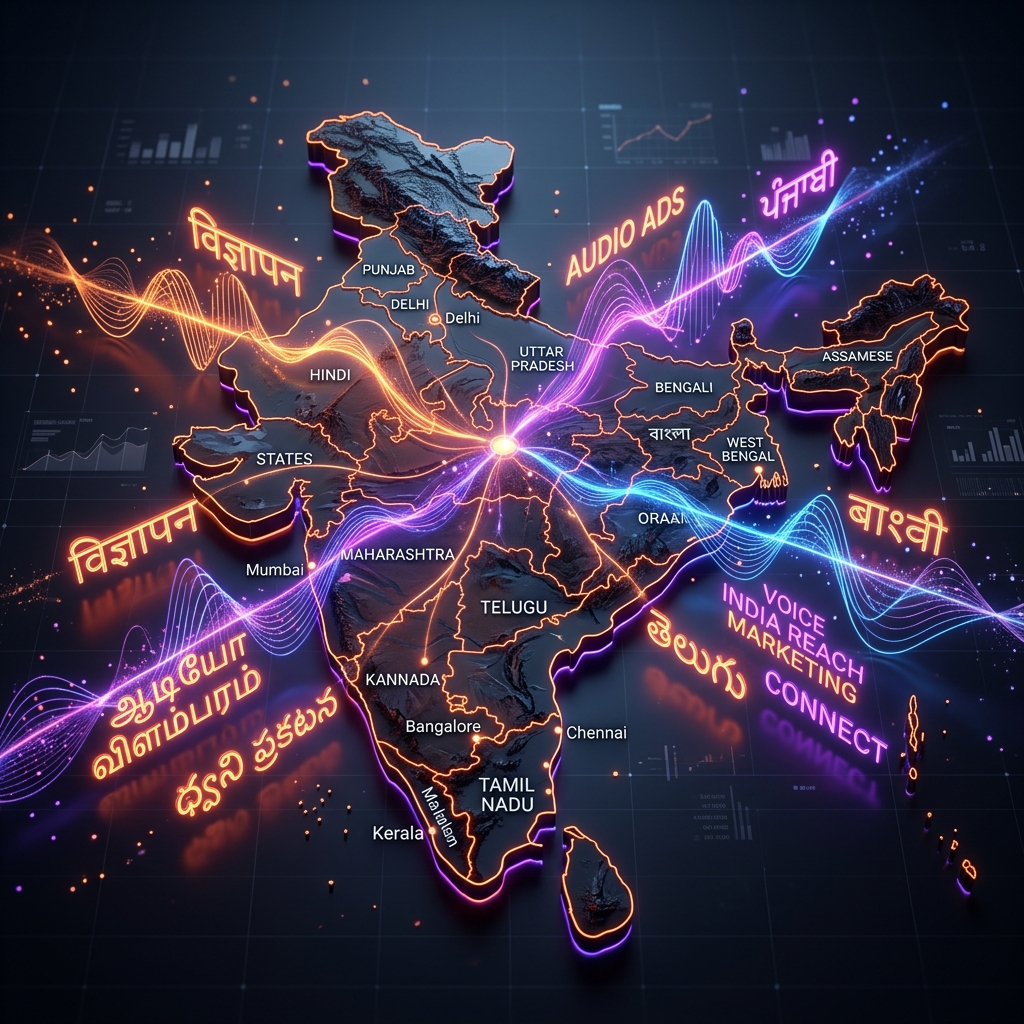
A brand based in Mumbai decides to expand its highly successful radio campaign into Karnataka, Tamil Nadu, and West Bengal. They take their winning Hindi script, send it to a translation agency, run the literal translated text through a generic text-to-speech engine, and broadcast the result.
The campaign flops.
Why? Because they translated the words, but they lost the culture. In the Indian market, transliteration is the enemy of connection.
The Flaws of Literal Translation in Advertising
Advertising relies on brevity and emotional resonance. When you merely translate an ad, you ignore the fundamental reality that languages carry different cultural baggage, emotional registers, and pacing.
Here are the three primary areas where translation-only approaches fail:
1. Tone and Honorifics
A warm, slightly casual tone might be the perfect approach for a youth-focused brand speaking Hindi. However, if that same casual grammatical structure is translated directly into Tamil, it may be perceived as disrespectful or overly familiar by the local audience.
[!NOTE] True localization adapts the intent of the message into the socially appropriate register of the target language.
2. Prosody and Rhythm
Every language has its own music—its own prosody. The cadence of spoken Bengali is entirely different from the rhythmic staccato of Marathi. When you use Western AI voice tools that simply map Indian phonemes onto English speech rhythms, the result sounds like a foreigner reading a script. It sounds uncanny.
3. Idioms and Cultural References
"Hitting it out of the park" makes sense in a cricket-obsessed nation, but regional idioms are highly specific. An effective localized ad rewrites the metaphor entirely to suit local cultural touchstones, rather than translating a Hindi idiom word-for-word into Telugu.
How Native AI Voice Generation Solves This
Until recently, the only way to achieve true hyper-localization was to hire native copywriters and native voice actors for every single language variant—a slow and incredibly expensive process.
Today, purpose-built AI like Audic AI bridges the gap. Because Audic's models are trained on native speech patterns across 12 Indian languages, they don't just pronounce the words correctly; they understand the rhythm of the language.
When paired with a "Brief-to-Ad" AI copywriter that understands cultural context, a marketer can input a core brand message in English and output culturally adapted, natively spoken audio in Malayalam, Gujarati, and Punjabi simultaneously.
Moving from Translation to Localization
If you are managing a national campaign, stop asking "How do we translate this for the South?" and start asking "How do we localize this value proposition for Chennai?"
The audience doesn't care how the content was produced. They care whether it sounds like it was made for them.
Ready to hear what true hyper-localization sounds like? Hear the Difference on our Voice Library or Start Creating Free.
Ready to create your first audio ad?
Generate a studio-quality audio ad in minutes — free to try, no credit card required.
Start Creating Free